Post
Understanding Watch Complications: Moonphase, Tourbillon & More
May
Watch Complications Explained: The Ultimate Guide to High Horology
For many people, a watch is simply a tool used to tell time. However, in the fascinating world of horology, watches can become incredibly sophisticated mechanical machines capable of performing extraordinary functions far beyond basic hours and minutes.
These additional functions are known as watch complications.
Understanding watch complications opens the door to appreciating the incredible artistry, engineering, and craftsmanship behind luxury timepieces.
From elegant moonphase displays to highly complex perpetual calendars and mesmerizing tourbillons, watch complications represent the absolute peak of mechanical innovation.
Today, collectors value complications not only for functionality but also for the emotional connection and technical mastery they represent.
This complete guide will explain the most important watch complications, different movement types, buying advice, maintenance tips, and essential horology terminology every enthusiast should understand.
What Are Watch Complications?
In horology, a complication refers to any function on a watch that goes beyond basic timekeeping.
A standard watch displays:
- Hours
- Minutes
- Seconds
Any additional mechanical feature is considered a complication.
Examples of watch complications include:
- Date displays
- Chronographs
- Moonphase indicators
- GMT functions
- Perpetual calendars
- Tourbillons
- Minute repeaters
The more complications a watch contains, the more mechanically sophisticated it becomes.
Some ultra-high-end watches contain hundreds or even thousands of components working together inside incredibly compact cases.
This mechanical complexity is one reason why watch complications are so admired among collectors.
The Most Popular Watch Complications
Date and Day-Date Complications
The most common watch complications are date and day-date displays.
A simple date complication shows the current day of the month through a small window on the dial.
A day-date complication adds the full day of the week as well.
These practical complications are extremely popular because they add everyday convenience without excessive dial complexity.
Luxury models like the Rolex Day-Date helped make this style iconic worldwide.
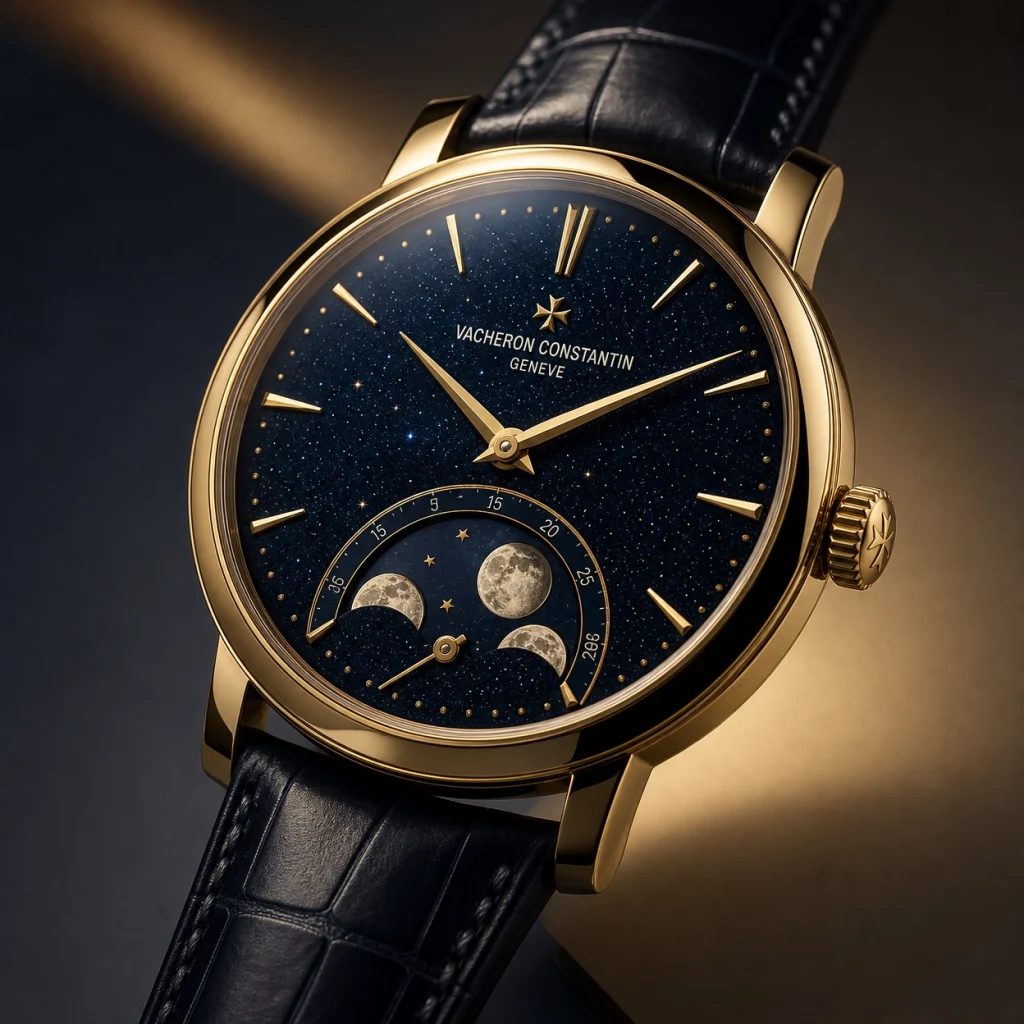
Moonphase Complication
The moonphase is one of the most beautiful and poetic watch complications ever created.
This complication tracks the lunar cycle and displays the current phase of the moon using a rotating disc beneath a dial aperture.
Most moonphase watches feature:
- Decorative moons
- Golden stars
- Night sky artwork
The moonphase complication highlights the artistic side of watchmaking and remains especially popular in elegant dress watches.
Perpetual Calendar
The perpetual calendar is one of the most respected watch complications in high horology.
This incredibly sophisticated mechanism automatically calculates:
- Different month lengths
- Leap years
- Calendar transitions
A properly programmed perpetual calendar can display the correct date for decades without manual adjustment.
Creating a perpetual calendar requires exceptional engineering skill and mechanical precision.
Minute Repeater
The minute repeater is one of the most complicated and prestigious watch complications ever invented.
Before electric lighting existed, minute repeaters allowed people to hear the time in darkness.
When activated, tiny internal hammers strike miniature gongs to chime:
- Hours
- Quarter hours
- Minutes
The level of craftsmanship required to build and tune a minute repeater is extraordinary.
Because of this, minute repeaters remain among the most expensive luxury watches in existence.
Tourbillon
The tourbillon is one of the most visually captivating watch complications.
Invented by Abraham-Louis Breguet in 1801, the tourbillon places the escapement inside a rotating cage.
This constant rotation helps reduce the effects of gravity on timekeeping accuracy.
Today, the tourbillon is admired primarily for its technical artistry and breathtaking mechanical beauty.
Luxury collectors often view tourbillons as symbols of elite watchmaking expertise.
Understanding Watch Movements
Beyond watch complications, the movement itself is the true heart of every watch.
The movement, also called the caliber, powers the hands and controls all additional functions.
There are several major movement categories in modern horology.
Manual-Wind Mechanical Movements
Manual-wind movements represent the purest traditional form of watchmaking.
These movements require the wearer to manually wind the crown regularly to store energy inside the mainspring.
Collectors appreciate manual watches for:
- Tactile interaction
- Mechanical purity
- Historical authenticity
- Elegant movement finishing
Many enthusiasts believe manual movements create a deeper emotional connection with the watch.
Automatic Movements
Automatic movements evolved from manual calibers by adding a weighted rotor system.
As the wearer moves their wrist throughout the day, the rotor spins and automatically winds the mainspring.
Automatic movements combine:
- Mechanical craftsmanship
- Daily convenience
- Traditional engineering
Because they do not require frequent manual winding, automatic watches are extremely popular for daily wear.
Quartz Movements
Quartz technology revolutionized the watch industry in the late twentieth century.
Quartz movements use:
- A battery
- An electronic circuit
- A vibrating quartz crystal
The quartz crystal vibrates at an incredibly precise frequency, allowing quartz watches to maintain exceptional accuracy.
Advantages of quartz movements include:
- Low maintenance
- Affordability
- High accuracy
- Excellent durability
Quartz watches remain highly practical for everyday use.
Spring Drive Movements
Spring Drive technology developed by Grand Seiko represents one of the most innovative movement systems in modern horology.
Spring Drive combines:
- Mechanical mainspring power
- Quartz-level accuracy
- Smooth gliding seconds motion
The result is a unique hybrid movement offering extraordinary precision while preserving mechanical character.
Many enthusiasts consider Spring Drive one of the greatest achievements in modern watch engineering.
Essential Watch Buying Guide
Purchasing a watch is an investment that should match your lifestyle, preferences, and long-term goals.
Establish Your Budget
Before exploring watch complications and luxury brands, determine a realistic spending range.
Remember to factor in:
- Maintenance costs
- Servicing expenses
- Insurance considerations
Choose the Right Watch Size
Case diameter is important, but lug-to-lug distance often affects wrist fit even more.
A watch should feel balanced and comfortable rather than oversized.
Understand Water Resistance
Water resistance ratings can be misleading for beginners.
General guidelines include:
- 30m: Splash resistance only
- 50m: Light water exposure
- 100m: Suitable for swimming
- 200m+: Serious diving capability
Evaluate Crystal Materials
The watch crystal protects the dial from scratches and damage.
Common materials include:
- Sapphire crystal
- Mineral glass
- Acrylic crystal
Sapphire offers the strongest scratch resistance and is preferred for luxury watches.
Essential Watch Care and Maintenance Tips
Proper maintenance helps preserve both performance and appearance.
Avoid Strong Magnetic Fields
Magnetism can negatively affect mechanical watch accuracy.
Keep watches away from:
- Speakers
- Laptops
- Smartphone magnets
- Large electronics
Rinse Watches After Saltwater Exposure
Saltwater and chlorine can damage gaskets and metal surfaces over time.
Always rinse your watch with fresh water after swimming.
Do Not Change the Date at Midnight
Many mechanical watch complications engage their date mechanisms during nighttime hours.
Avoid adjusting the date between:
- 9 PM and 3 AM
This helps prevent internal gear damage.
Service Mechanical Watches Regularly
Mechanical movements require servicing approximately every:
- 5 to 7 years
Professional servicing includes:
- Disassembly
- Cleaning
- Lubrication
- Regulation
- Gasket replacement
Important Horology Terms Every Collector Should Know
Bezel
The ring surrounding the watch crystal, often used for timing functions on sports watches.
Caliber
Another word for the movement powering the watch.
Chronograph
A stopwatch complication integrated into the watch movement.
Chronometer
A highly accurate watch officially certified through precision testing.
Escapement
The regulating mechanism controlling energy release inside mechanical movements.
Guilloché
An intricate decorative engraving pattern commonly found on luxury watch dials.
Tachymeter
A scale used to calculate speed based on travel time, commonly found on chronograph bezels.
Final Thoughts on Watch Complications
Understanding watch complications allows collectors to appreciate the extraordinary engineering and artistry hidden inside luxury timepieces.
Every complication, from a simple date display to a highly complex tourbillon or minute repeater, represents centuries of innovation and mechanical mastery.
Whether you prefer practical everyday functions or highly artistic complications, the world of horology offers endless depth and fascination.
For many enthusiasts, learning about watch complications becomes the first step into a lifelong passion for fine watchmaking and collecting. link . site
